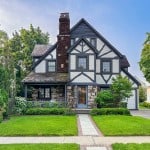
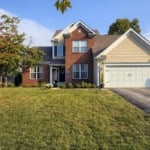
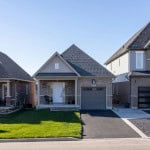
Whether you’re selling a shotgun-style house in New Orleans or a massive five-bedroom home in Milwaukee, a strong listing does more than simply document a property. It gives buyers a reason to picture themselves there.
That work starts on the ground, where outdoor spaces need the same purpose and polish as a living room. Pairing backyard staging with thoughtful drone photography can show how the home sits within its yard, neighborhood, and surrounding landscape. The goal of using drone photography is not to make a property look larger or more dramatic than it is. The goal is to reveal and highlight the parts of a home that an average photo shoot simply cannot reach.
Start with the outside story
Outdoor staging is less about filling a patio with expensive furniture and more about making each area easy to understand. Buyers should be able to look at a photo and immediately grasp what happens there.
Before a photographer arrives, walk the property as though you are seeing it for the first time. Start at the front curb, move around both sides of the house, and continue through the backyard.
The basic rule is simple: leave enough in the scene to show how the space lives, but remove anything that makes it feel crowded, neglected, or temporary.
Outdoor living areas work best when they have a clear job. A front porch can suggest neighborly conversation with simple staging like two chairs and a small table while a covered patio can become a full outdoor dining room.
Stage for function, not perfection
Buyers rarely expect a home to look like a magazine spread. A little realism helps. A good approach is to make the space feel maintained, inviting, and real.
For a patio or deck, begin with the practical work:
- Sweep hard surfaces and remove leaves from corners.
- Wipe outdoor tables and chairs.
- Straighten cushions and replace visibly worn ones.
- Clean the grill and keep it closed unless it is a focal point.
- Remove dead plants and refresh containers with healthy greenery.
- Put away covers, spare chairs, and unused equipment.
- Check that exterior lights, fans, and water features are functioning.
Then give the space a purpose. A dining table can be set simply, without turning the shoot into a garden party. A lounge area can include neatly arranged seating and one or two modest accessories. Avoid cluttering every surface with decorative objects. In listing photography, buyers need visual room to imagine their own life entering the frame.
The same principle applies to yards. Freshly mowed grass, defined edges, trimmed shrubs, and clean landscaping create an immediate impression of care. Outdoor maintenance can subtly signal to potential buyers how the rest of the home has been treated.
Felix Guan, Founder of VideoGuru, emphasizes that sellers should think beyond curb appeal when preparing the home for the aerial perspective:
“Before a drone shoot, sellers should make the property look just as polished from above as it looks from the ground. It’s also helpful to open up patios, decks, pools, and other outdoor areas so the drone can capture the full lifestyle appeal of the property rather than just the house itself. ”
That distinction is important. Ground photography might focus on a beautiful patio or a clean front elevation. Drone imagery can expose the forgotten corner behind the garage, the cluttered side yard, the uneven lawn, or the parked vehicle that interrupts the property’s flow.
Prepare every side of the property
A drone shoot changes the definition of “photo shoot ready.” It’s not enough to clean the front walkway or focus only on the backyard staging. The camera may see rooflines, side yards, fencing, neighboring streets, driveway placement, and the relationship between the house and its lot.
Scott Rose of DroneVideos.com recommends preparing the full property footprint and sharing key information with the photographer in advance:
“Make sure to prepare your entire property, including side yards and areas behind the house, because drone photos reveal spaces that ground photos often miss. Turn off sprinklers before the shoot so driveways and patios have time to dry evenly. Most importantly, share the property boundaries and highlight features like a large backyard, waterfront access, or nearby walking trails so your photographer can plan shots that showcase what makes the home special.”
That last point often separates a useful drone session from a generic one. A drone can capture a house from above, but an overhead photo alone may not explain why the property matters. The seller or agent should guide the photographer to what deserves attention.
It also helps to be honest about boundaries. Aerial photos can make it easy for buyers to misread where a property ends, especially on larger lots or homes near water, woods, shared open space, or undeveloped land. A good real estate photographer can create images that clarify the setting without implying that neighboring land belongs to the seller.
Choose drone angles that explain the home
The most effective drone imagery usually has a purpose. It should answer a buyer’s natural questions:
- How much yard does the home have?
- Where is the pool, deck, patio, or outdoor kitchen in relation to the house?
- Is there privacy from neighboring homes?
- What does the street and surrounding neighborhood look like?
- How close is the property to a park, trail, waterfront, downtown, or other desirable location?
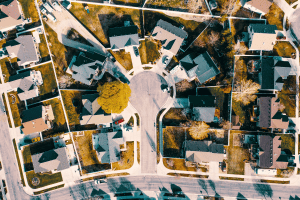
A straight-down overhead shot can be useful for showing lot shape, rooflines, or the layout of a pool and backyard, but can also flatten the home into a diagram. For most listings, the more valuable image is a lower aerial frame that adds perspective while keeping the house grounded.
Eli Zafrani, Owner and Operator at Pick Three Photography, explains why the mid-level aerial shot often carries more weight than the high-altitude view:
“The most valuable drone shot usually isn’t the overhead one. It’s the frame from 25 or 30 feet high, where the camera sits above the landscaping and below the roofline and shows the house the way no tripod can.”
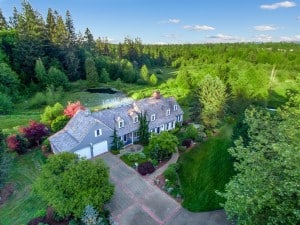
That 25- to 30-foot perspective can show the depth of a covered porch, the way a deck connects to a yard, or the relationship between a home and a mature tree canopy. It gives buyers a view they could not get while standing on the sidewalk, but it still feels connected to the actual experience of approaching and living in the home.
Build a reveal into your drone video
A common mistake with drone video shoots is showing everything immediately: a quick high-altitude shot, a fast orbit of the house, a broad sweep over the roof, and then the video is over. It may look technically competent, but it doesn’t build anticipation or guide the viewer toward what makes the listing distinct.
Ben Wagner, CMO of InboundREM.com, suggests treating the flight path as a gradual reveal:
“Think about a grand reveal. A good drone video builds toward something, so if there’s a feature hidden from the street like a pool, a garden, or a view, plan the flight path to save it for the climb rather than showing everything in the first five seconds. Alternatively, consider how the house itself might be the grand reveal after a drone trip through a tree-lined street. Drone videography allows for opportunities to show off the greater context of the property, so take full advantage.”
This does not require elaborate filmmaking. It simply means deciding what the viewer should learn first, second, and last. The best reveal is specific to the listing. The camera should not move just because it can, but because each change in perspective tells buyers something useful.
Make the outdoor space part of the sale
Backyard staging and drone photography work best when they are planned together. A perfectly styled patio loses impact if the drone angle makes it look small and disconnected. An impressive aerial view of a large yard is less persuasive if the ground-level images do not show how someone might use it.
Think of the listing as a sequence:
- Ground-level photos establish warmth, scale, and usable outdoor rooms.
- Mid-level drone images show how those areas connect to the house.
- Higher aerial shots explain lot size, privacy, boundaries, and location.
- Video creates a visual path toward the property’s strongest feature.
A buyer may not remember every image in a listing, but they will remember the feeling of seeing a backyard that looked ready for a Saturday night, a deck that opened toward a view, or a home that made sense within the space around it. That is what good backyard staging and smart drone work accomplish. They do not invent a lifestyle. They simply illuminate the existing one.