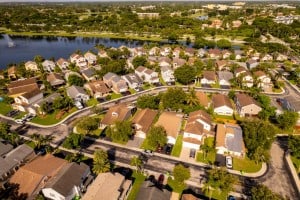
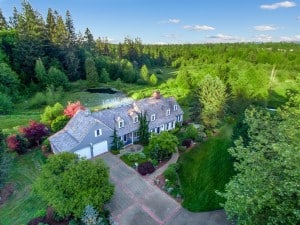
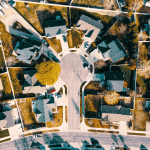
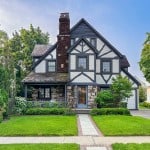
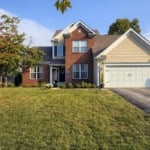
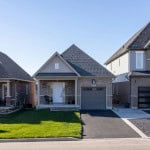
A drone does not care what a house costs, how recently the kitchen was renovated, or whether the listing copy calls the backyard “an entertainer’s dream.” It doesn’t matter if you’re selling a single-family home in Cincinnati or a massive house in Houston, the drone sees the place as it is: roof, driveway, fence line, trees, shadows, bins, toys, bare spots in the grass, and whatever else a person on the ground has learned to ignore.
That is the usefulness of aerial real estate photography. It shows buyers how a home sits in the world around it. But the same elevated view can make a quality property look disorganized if the timing is wrong, the light is hard, or the yard has not been prepared.
Scheduling a drone shoot comes down to two connected decisions: what needs to be shown, and when the light will show it best. A pool, a wooded lot, or a deep backyard may each call for a different flight plan and a different hour of the day.
So, while a drone may not care about how much your house costs, it does care about the time of day you schedule your shoot. Let’s learn more about the best time of day for real estate photos from the experts.
Start with what the drone sees
Before you start worrying about the best time of day for real estate photos, prepare the entire property. This includes the portions of the yard that do not appear in the standard front exterior photos: the side passage beside the garage, the narrow strip behind a fence, the back corner where yard tools tend to pile up. A fence is useful for privacy. It is not useful for hiding an eyesore from a camera flying 100 feet overhead.
Drone photography gives buyers a more complete sense of the property’s layout, but also exposes clutter that a terrestrial camera can miss. That is why basic exterior preparation matters so much.
Alan Martin, FAA-Certified Remote Pilot at Vantage Aerial Works, puts it plainly:
“A fence can hide a trash can from the street and still leave it in plain view from a drone. Before the shoot, put bins, hoses, toys, and lawn equipment in a garage or shed, clear the driveway, and tidy the patio. Send the photographer your address and point out the outdoor features you want buyers to see before choosing a shoot time. They can check the sun’s position and where shadows from the house and trees will fall. Golden hour isn’t automatically the best choice if those features are already in deep shadow.”
That advice gets to the heart of deciding the best time of day for real estate photos: the right light is not always the prettiest light in the abstract, but the light that helps the listing show what makes the property worth seeing.
If the important feature is a patio beneath mature trees, the low evening sun may leave it in shadow. If the selling point is an open lawn behind the house, a morning shoot may give it even light while the rear of the home catches the sun. If the house has a dramatic view to the west, late afternoon may be the obvious choice – but only if the glare does not wash out the scene.
The time on the clock matters. So does the direction the home faces, the height of nearby trees, the pitch of the roof, neighboring structures, and even the season. A yard that is sunny at 5 p.m. in June will likely be dark by then in November.
Understand the light
The broad categories are familiar: morning, midday, afternoon, and the lower light around sunrise and sunset. Each can work, but each can also create problems.
The low light shortly after sunrise and before sunset is often called golden hour. It is popular for good reason: the sun is lower in the sky, colors can appear warmer, and the light can give a home a sense of depth. Long shadows reveal texture in lawns, trees, masonry, and rooflines. For a house with clean lines and a favorable orientation, that light can make a listing image feel like a place a buyer would want to arrive home to.
But dramatic light comes with dramatic shadows. A drone frame can become a map of every object standing between the sun and the ground. A long shadow from a two-story house or a stand of trees can cover up a small backyard or swallow a freshly stained deck, outdoor kitchen, or pool. Utility poles and light posts may cast dark lines across the driveway.
Andrew Kobza, Owner and FAA Licensed Pilot at Professional Drone Solutions, advises sellers and agents to consider that tradeoff before booking:
“Be aware of the lighting at the time you request. 1-3 hours after sunrise and 1-2 hours before sunset will look dramatic, but shadows cast from homes, trees, light posts, and more then become a factor. Midday is a great general option.”
When the sun is high, shadows are shorter. That can make lot lines, driveways, patios, pools, and backyards easier to read. While a midday shoot can have flatter, brighter lighting, it can be especially helpful for a property where the main objective is clarity: showing a large backyard, a straightforward roofline, a clean rectangle of lawn, or the relationship between the house and nearby amenities.
Match the shoot time with the property
There is no universal best time of day for real estate photos. The right schedule depends on what the images need to prove.
A house with a large pool and west-facing backyard may benefit from a morning shoot before low afternoon sun turns the water into a bright, reflective sheet and sends tree shadows across the deck. A home with a shaded front elevation could look better later in the day, when sunlight reaches the driveway and entry. A property near a park, trail, or waterway may need a time when the surrounding context is visible rather than lost in shadow.
The process starts with a simple conversation. Tell the photographer what matters:
- The backyard is unusually deep.
- The pool and patio are major selling features.
- The property backs up to a wooded area, a golf course, or a trail.
- A rooftop deck has a city, water, or mountain view.
- The home sits on a corner lot.
- There is a detached workshop, barn, guesthouse, or outdoor kitchen.
- The home is located near a school, park, waterfront, or green space.
This is not just information for the listing description. It helps the drone operator plan the angle, elevation, direction of travel, and time of day.
Brandon Pierce, Owner and Operator of Valley View Photo in Phoenix, AZ, notes that yard prep and scheduling are inseparable, particularly in places with hard, bright sunlight:
“When it comes to preparation for drone photos or video, basic yard preparation helps the most: mow the lawn, blow away leaves, clear cars from the driveway, and tuck away trash cans, pool toys, and hoses. Aerial shots expose backyard clutter that ground-level photos and video don’t show as easily. Scheduling also matters; soft morning or late-afternoon light give excellent results given our sometimes harsh lighting here in Arizona.”
Don’t fear a cloudy morning
Home sellers often hope for a cloudless blue sky, but an overcast morning can be actually better for certain aerial shoots. Thin or even cloud cover softens the light and reduces the harsh contrast between sunlit roofs and dark yard areas. It can make landscaping, siding, paved surfaces, and outdoor living spaces easier to photograph evenly.
Michael Summer, Director of ScoreDetect, recommends considering an overcast morning when direct midday sun would create too much contrast:
“Book an overcast morning if you can: midday sun throws hard shadows across rooflines that make photos look messier than the house actually is.”
An overcast shoot can be particularly effective for homes with complicated rooflines, tall trees, a lot of exterior texture, or tight spacing between neighboring houses. It can also help with dark siding or deeply shaded porches where the difference between bright sun and shadow may be difficult to balance in a single image.
That does not mean every gray day is ideal. A heavy, featureless sky can make a property feel dull, especially in a wide drone shot with lots of sky in the frame. A professional photographer can often work around that through framing and editing, but weather is still a large part of the equation.
The real point is not to chase a particular kind of weather, but to choose the conditions that make the property easiest to understand.
Build a better shot list
Drone photos and videos are strongest when they complement, rather than duplicate, the standard property photos. The drone should show the aspects of a home that a tripod cannot: the lot’s scale, the connection to the neighborhood, the outdoor layout, nearby trails or water, and the way a home sits among the trees and streets around it.
A well-rounded aerial shot list might include:
- A lower-elevation image showing the front of the house above landscaping but below the roofline.
- A rear angle that captures the home, patio or deck, lawn, and pool in one usable view.
- A higher image showing the lot shape and backyard depth.
- A side angle that explains privacy, green space, or adjacent amenities.
- A context image showing a nearby trail, park, waterfront, downtown district, or other legitimate location benefit.
- A short video sequence that moves toward the property’s most distinctive outdoor feature.
Not every listing needs every shot. A modest home on a compact lot may only need two or three useful aerial images while a larger property with acreage, waterfront, a significant outdoor living area, or a scenic setting may justify a more involved plan.
What matters is that the photos answer questions. Where does the yard begin and end? How does the deck relate to the pool? Is the home surrounded by trees or neighboring roofs? What lies beyond the fence? Is there a walking trail nearby, or just a patch of woods?
Let the property dictate the hour
The best time of day for real estate photos is not defined by a rule like “always shoot at golden hour.” It comes from paying attention to the actual setting: where the sun rises, where it falls, what the trees block, and which part of the property deserves to be seen clearly.
Prepare the property from the top down, give the photographer a clear list of important features, ask about sunlight and shadow patterns, and leave room in the schedule for weather and airspace contingencies.