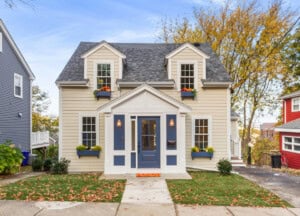
Buyers in many areas have more options than they did during the pandemic-era frenzy, with inventory rebounding from historic lows and competition easing. At the same time, home prices remain high and renovation costs are elevated.
With more homes available but at higher price points, the real question for buyers is: Do you buy a fixer-upper that needs work, or pay more for a move-in ready, turnkey home and skip the projects? That alone will affect how quickly you can move in, how much uncertainty you take on, and what homeownership looks like after closing.
Below, we’ll break down the real tradeoffs between buying a fixer-upper or move-in ready home—from costs and financing to neighborhood access and long-term value.
What’s the difference between a fixer-upper and move-in ready?
A move-in ready house (also called a turnkey home) usually doesn’t need anything done to it in order to get the keys and settle in. The systems, like the HVAC, plumbing, and electrical, are often newer, functional, and less likely to get flagged for replacement in the inspection. The aesthetics—like paint, flooring, cabinetry—are also typically in good shape.
“Turnkey” implies that considerable updates have been made, even if the home isn’t necessarily new. While you might want to swap a light fixture or repaint a bedroom to suit your style, the home requires zero immediate labor to be habitable or comfortable.
A fixer-upper, on the other hand, is a property that needs noticeable work before (or soon after) you move in. That might mean a cosmetic overhaul like outdated kitchens, worn-out flooring, or older bathrooms—or it could mean moving walls and gutting rooms.
Homes listed as a fixer-upper could need more TLC, like serious repairs to roofs, electrical, plumbing, or even the structure. Some fixer-uppers are livable but dated; others require a lot of work and money just to get the home sorted with the basics. Usually, fixers are priced below comparable turnkey homes to account for the time, cost, and uncertainty involved.
Pros and cons of buying a fixer-upper
Pros
- A lower price and less competition: Houses that need work usually sell for less money. Most buyers want something finished and easy, so they skip over the homes that need repairs. This means you might be able to get a house for a better price without getting into a bidding war.
- A way into more desirable locations: Sometimes, the only way to afford a house in a great school district or a popular area is to buy one that needs work. By choosing a fixer-upper, you can get into a neighborhood that might otherwise be too expensive for your budget.
- You get to make it yours: When you buy a house that is already finished, you are living with someone else’s choices. With a fixer-upper, there’s more room for personalization, from the flooring and paint all the way to the bathroom layout and the kitchen cabinets.
- You can build value faster: This is known as sweat equity. If you buy a house at a low price and make strategic renovations, the home could be worth much more than what you paid for it plus the cost of the work. It is a way to grow your wealth through effort rather than just waiting for the market to go up.
Cons
- Costs can grow faster than you expect: It’s common for renovations to cost more than you planned. Once walls are opened up, you might find hidden problems like old pipes or bad wiring. Unplanned repairs can eat up your savings very quickly.
- Projects almost always take longer than planned: Whether it’s a delay in getting materials or a contractor being busy, home projects rarely finish on time. If you are paying for a place to live while your house is being worked on, these delays can become expensive and frustrating.
- Financing can be harder: Standard home loans are meant for houses that are ready to live in. If the house doesn’t have a working kitchen or a good roof, the bank might not give you a regular mortgage. You may have to use special renovation loans that require a lot more paperwork.
- Living in a construction zone is hard: If you move in while the work is happening, prepare for a lot of noise and dust. It can be stressful to cook in a temporary kitchen or share one bathroom while the others are being fixed. For many, the mess, disarray, and lack of privacy are the hardest parts.
Pros and cons of move-in ready homes
Pros
- You can start living right away: One of the biggest advantages of buying a turnkey home is convenience. You don’t have to deal with contractors or live out of boxes while a kitchen is being built. This is a huge help if you are moving for a new job or need to get settled into a routine quickly.
- Your monthly costs are easier to predict: Since the house is already updated, you probably won’t have to deal with a broken water heater or a leaking roof in your first year. This makes it much easier to plan your budget because you won’t be hit with a big repair bill right after you move in.
- Getting a loan is much simpler: Most banks are happy to lend money for homes that are in good shape. You won’t have to jump through the extra hoops or deal with the extra paperwork that comes with fixer-upper loans. The appraisal and home inspection are also less likely to cause delays.
- Lower utility bills: Many move-in ready homes, especially if they’re newer, have better windows, modern insulation, and efficient heating and cooling systems. These upgrades help keep your monthly energy bills lower compared to an older, unrenovated house.
Cons
- You will pay a premium price: You are paying for the work the previous owner already did. Move-in ready homes usually cost more than houses that need work because you are paying for the luxury of not having to do the upgrades yourself.
- The style is already chosen for you: Since the house is finished, you don’t get much of a say in how it looks. You might find yourself living with a kitchen or bathroom style you don’t love just because it’s too new and expensive to justify changing it right away.
- Your property taxes might be higher: Property taxes are based on how much the home is worth. Because a move-in ready home is valued higher than a fixer-upper, your annual tax bill will likely be higher from the start.
- There is less room to negotiate: Turnkey houses are popular and tend to sell faster. Because so many people want a finished home, you might have less leverage to ask the seller for a lower price or for help with closing costs.
Turnkey home vs. fixer upper: Which is cheaper long-term?
At first glance, fixer-uppers can look like the more affordable option. With typically lower asking prices, homes that need some TLC can seem like a better deal than a home that doesn’t need any work done. But lower upfront cost doesn’t always mean lower total cost.
Where fixer-uppers can save money
- Lower purchase prices
Homes that need work often sell below the neighborhood average, which can make monthly payments more manageable or allow buyers to prioritize a certain location over finishes. - Opportunity to add value over time
Buyers who renovate gradually and stay in the home long-term may be able to spread costs out and benefit from the appreciation once improvements are complete.
When a fixer-upper can be more expensive
- Renovation expenses
Kitchens, bathrooms, roofs, and systems that keep the home running can each add tens of thousands of dollars. Unexpected costs and design choices can actually make a fixer-upper more expensive than a comparable move-in ready home. - Carrying extra costs
Paying rent for a place to live on top of the mortgage, taxes, and insurance for the fixer-upper can add up quickly—or if living in the home at the same time as renovations, there could be unexpected hotel stays or meals out if you need to be out of the home. - If there’s no sweat put into the sweat equity
Sweat equity only makes a difference in the overall value of the home if you’re actually doing a lot of the work yourself. Once too many contractors are involved, the price paid for repairs might outweigh the savings of buying a fixer-upper.
Why move-in ready homes can be cheaper in practice
Move-in ready homes can cost more upfront, but they also offer more convenience and predictability. Essentially, when buying a house that’s already finished and updated, you’ve locked in the cost of the labor and materials—and you’re less likely to have any major repair expenses in your first year.
Plus, you probably don’t need as much cash on hand to purchase a turnkey home if you qualify for lender financing. You can save for desired updates or take out a home equity line of credit (HELOC) to make improvements. Fixer-uppers, especially if they’re deemed “uninhabitable” when buying, often need more liquid cash to cover the costs of contractors, repairs, and materials.
Financing differences between fixer-upper and move-in ready
The biggest financing difference between a fixer-upper and a move-in ready home comes down to whether the house qualifies for standard mortgage financing.
Financing a move-in ready home
Standard financing—like conventional, FHA, or VA loans—is designed for homes that are move-in ready or in good working order. As long as the home is habitable, like a working kitchen, heat, and a roof in decent condition, buyers can often put as little as 3% to 3.5% down and secure a standard interest rate.
If just one major item needs to be fixed, like replacing the roof, it can sometimes be handled during negotiations. In many cases, the bank and insurance company will still allow the sale to close as long as the issue is addressed immediately after closing.
Financing a fixer-upper
If a house has multiple major issues that make it uninhabitable—such as unsafe electrical, a nonfunctioning kitchen, or exposed walls with no insulation—standard lenders may refuse to finance it. That’s where specialized loan products come in.
FHA 203(k) loans
This is a government-backed loan that allows buyers to finance the purchase of a primary residence and the repairs at the same time. It’s a popular option for first-time buyers because it requires just 3.5% down and has more flexible credit requirements.
The tradeoff is complexity. Buyers must hire an approved consultant to oversee the work, and contractors must be approved as well. Funds are released in stages as repairs are completed, which means most of the work needs to be done by professionals. It’s well-suited for safety and livability repairs—like roofing or electrical—but involves more paperwork and oversight.
Fannie Mae HomeStyle Renovation loans
This is a more conventional alternative to the 203(k) and can be a better fit for buyers with stronger credit. The biggest advantage is flexibility. While the 203(k) focuses mainly on making a home safe and livable, the HomeStyle loan allows for a wider range of projects, including higher-end upgrades—like a backyard deck, swimming pool, or major landscaping.
Loan amounts are usually based on a percentage of the home’s as-completed value, which can mean more funds for buyers with bigger renovation plans.
Cash or hard money loans
Some homes are in such poor condition—like missing floors or no running water—that they won’t pass a bank appraisal at all. In these cases, sellers will often only accept cash.
Buyers without hundreds of thousands in the bank sometimes turn to hard money lenders. These are private lenders that offer short-term, high-interest loans based on the home’s value after repairs. It’s fast but expensive, usually used as temporary funding until the home is renovated enough to qualify for a standard mortgage.
Note: Even with renovation loans, buyers should plan for a contingency fund of 10% to 20% of the renovation budget to cover inevitable surprises that fall outside the loan value.
Is it better to buy a new home or a fixer upper?
In the end, whether a move-in ready or fixer-upper is right for you comes down to what best fits your budget, schedule, and tolerance for uncertainty or disruption.
A move-in ready or new construction home may be the better fit if:
You prioritize time and predictability. Buyers with demanding jobs, young families, or little interest in managing renovations often find that paying a premium for a finished home is worth it. You’re trading upfront costs for consistent monthly payments, easier financing, and a home that works from day one. For many, that ease is a quality-of-life investment.
A fixer-upper may make more sense if:
You value flexibility, customization, and long-term potential. Buyers who are comfortable with some disruption—and who plan to stay put—may see a fixer-upper as a way to build equity and tailor a home over time. In many markets, it can also be a path into neighborhoods that might otherwise be out of reach. For hands-on buyers, that tradeoff can be both financially and personally rewarding.
The bottom line
If you’re still on the fence, look for a “cosmetic fixer.” These are homes that are structurally sound but visually dated, and can be a great middle ground for entering the market. They usually come at a lower price point than turnkey homes, qualify for standard financing, and allow buyers to make updates gradually, with less risks and costs of a major project home.
For many buyers, this approach offers a more manageable way to build value and a home—without the pressure of a full-scale renovation.
FAQ: Move-in ready vs fixer-upper
What decreases property value the most?
Deferred maintenance or run-down systems tend to have the biggest impact on home value. Problems with roofs, foundations, plumbing, or electrical systems can significantly lower a home’s price because they’re expensive to fix and can limit financing options for buyers.
Are move-in ready homes worth it?
Move-in ready homes can be worth the higher price for buyers who value convenience and predictability. They typically come with simpler financing, fewer immediate repairs, and lower risk of surprise costs, especially in the first year of ownership.
Is it better to renovate a fixer-upper or buy a turnkey home?
Renovating can make sense for buyers with time, cash reserves, and a long-term plan, while buying turnkey often works better for those who want cost certainty and faster move-in. The right choice is different for everyone, but usually comes down to the buyer’s budget, timeline, and risk tolerance.
Should first-time buyers avoid fixer-uppers?
First-time buyers don’t need to avoid fixer-uppers, but they should be cautious and do their due diligence before purchase. Homes with mostly cosmetic issues can be manageable, while properties needing a major overhaul often require more cash, time, and experience than many first-time buyers expect or can handle.