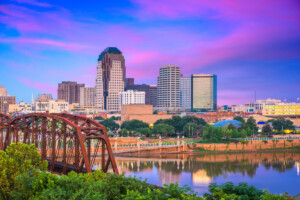
Baton Rouge, LA, is more than just the capital of Louisiana; it’s a city with a rich blend of history, culture, and modern amenities. From its lively music scene to its delicious Cajun and Creole cuisine, living in Baton Rouge offers a unique experience that combines the charm of the South with the excitement of city life. Whether you’re settling into a new apartment in Baton Rouge, just bought a home in the city, or have been a longtime resident, this Redfin article will dive into some fun facts about Baton Rouge you’ll want to know.
Interested in moving to Baton Rouge? Check out:
Apartments for rent in Baton Rouge, LA | Houses for rent in Baton Rouge, LA | Homes for sale in Baton Rouge, LA

Quick facts about Baton Rouge
| Median home sale price | $252,000 |
| Average monthly rent | $1,186 |
| Walk Score | 39/100 |
| Transit Score | N/A |
| Bike Score | 44/100 |
1. The Old State Capitol is a local landmark
The Old Louisiana State Capitol is a Gothic Revival castle-like building overlooking the Mississippi River. It served as the state capitol from the mid-1800s until 1932 and now functions as a museum. Its stunning architecture and historical significance make it a must-visit landmark.
2. The city’s name translates to “Red Stick”
Baton Rouge means “Red Stick” in French, named after a red cypress pole that marked the boundary between tribal hunting grounds. The name reflects the city’s deep Native American roots and French colonial history. This symbolic name sets the tone for the city’s rich and diverse heritage.
3. The Spanish Town Mardi Gras Parade is one of Baton Rouge’s signature celebrations
Baton Rouge’s Spanish Town Mardi Gras Parade is one of the city’s most beloved and quirky celebrations. Known for its flamboyant floats, humorous themes, and pink flamingo mascots, the parade embodies the city’s festive spirit. It’s a highlight of the Mardi Gras season, drawing large crowds each year.
4. The Louisiana State Capitol building is the tallest in the country
The current Louisiana State Capitol is the tallest capitol building in the United States, standing at 450 feet with 34 floors. Completed in 1932, it features an observation deck with panoramic views of Baton Rouge. The building’s art deco design and historical importance make it an iconic symbol of the state.
5. The Red Stick Farmers Market
The Red Stick Farmers Market is a year-round, producer-only market featuring local farmers and artisans. Visitors can find fresh produce, baked goods, handmade crafts, and more. The market supports local agriculture and fosters a sense of community.
6. Baton Rouge is known for its Cajun and Creole cuisine
Baton Rouge is a culinary hotspot known for its delicious Cajun and Creole cuisine. Signature dishes include gumbo, jambalaya, crawfish étouffée, and boudin, showcasing a blend of French, Spanish, African, and Native American influences. Restaurants like Louisiana Lagniappe Restaurant and Cecelia Creole Bistro offer rich culinary experiences that delight locals and tourists.
7. The Louisiana Art & Science Museum is located in a historic railroad depot
The Louisiana Art & Science Museum (LASM) offers interactive exhibits, an art gallery, and a planetarium. Located in an early 20th century railway station on the Mississippi River, the museum caters to all ages, with hands-on science activities and rotating art exhibitions. It serves as an educational and cultural cornerstone in Baton Rouge.
8. Baton Rouge played a role in the civil rights movement
Baton Rouge was a significant site during the civil rights movement, notably with the 1953 Baton Rouge bus boycott. This boycott served as a precursor and inspiration for the more famous Montgomery bus boycott. The city’s history includes important contributions to the fight for racial equality.
Methodology: The median home sale price and average monthly rental data is from the Redfin Data Center. The Walk Score, Transit Score and Bike Score data is from Walk Score.